

Pinnacle Child Development Clinic, 202, 2nd Floor, Kanaiya Building, Opp. Airtel Store, Linking Road, Bandra West, Mumbai - 400050


With nearly 3.5 million preterm births each year, India has one of the world’s largest premature infant populations. These babies need more than routine pediatric visits. They require specialized developmental monitoring, neurological evaluation, and long-term follow-up. This is why more families today seek Preterm Newborn Assessment in Mumbai to ensure their baby’s early development stays on the right track.
Premature birth is not a setback — it is simply an early start that needs careful guidance, close observation, and compassionate expertise.
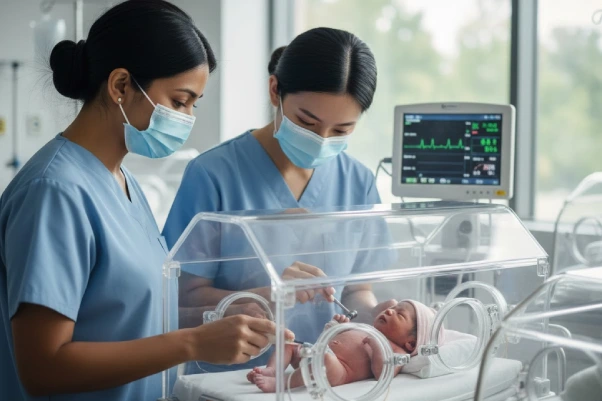
Preterm babies have unique developmental patterns because they are born before their organs — especially the brain, lungs, gut, and sensory systems — have fully matured. This means they may take longer to coordinate feeding, breathing rhythms, weight gain, reflexes, and early movement patterns. Many preterm infants also show differences in tone, alertness, sleep, and sensory responses. None of these are signs of permanent problems; they simply reflect a nervous system that is still completing the development that should have taken place inside the womb.
Every preterm baby grows at their own pace. The goal of assessment is not to create worry, but to understand their developmental path and support them through each stage.
The first two years of life are crucial for every child, but for a premature baby, these months can determine their long-term developmental trajectory. In this period, the brain develops rapidly, forming pathways for motor control, vision, hearing, cognition, and communication. Early assessments help ensure that no subtle delays are overlooked, especially because premature infants often show very early signs that are not easily noticeable to families.
A structured assessment helps protect skills such as fine and gross motor development, feeding coordination, sensory processing, early language abilities, emotional bonding, and later school readiness. Parents often ask whether they are “too late” or “too anxious.” The scientific truth is simple — the earlier the Preterm Newborn Assessment in Mumbai, the better the outcomes for growth and development.
Dr. Rajeshwari Ganesh is a Developmental & Behavioral Pediatrician trusted by families navigating the delicate journey of premature and medically fragile infants. Her work focuses on supporting NICU graduates, newborns with complex medical histories, and infants who require careful developmental monitoring during the earliest and most critical stages of life.
Some children are simply born with more rigid or sensitive nervous systems. When parents understand this, they replace guilt with strategy—and that shift alone improves outcomes.
She is internationally trained, holding a Fellowship in Developmental & Behavioral Pediatrics from the National University Hospital, Singapore, along with MRCPCH, MD Pediatrics (USAIM), DCH, and MBBS from Mumbai University.
Expert NICU Follow-Up and Early Developmental Care
Dr. Rajeshwari Ganesh brings extensive experience in NICU follow-up care, enabling early identification of subtle developmental differences that may not be immediately apparent. Through structured surveillance, timely screening, and clear guidance, she helps families understand their child’s developmental roadmap and move forward with confidence.
Her approach emphasizes continuity of care, early intervention when needed, and compassionate support for parents during their child’s early developmental journey.
A preterm assessment is gentle, child-centred, and comprehensive. It begins with growth monitoring using preterm-specific charts, followed by feeding and nutritional evaluation. This helps determine whether the baby is coordinating sucking, swallowing, and breathing well — something preterm infants often struggle with initially.
A detailed neurological examination follows, observing tone, reflexes, alertness, head control, movement quality, and responsiveness. Sensory screening is done to evaluate early vision and hearing responses, along with how the baby reacts to light, sound, and touch. Motor development is reviewed in stages — head control, tummy time, limb movement, posture symmetry, and early coordination. Social and cognitive development are also assessed through eye contact, interest in faces, early vocalization, and bonding cues.
The session ends with clear guidance for parents on positioning, feeding, early play, stimulation, safe handling, sleep routines, and red flags to watch for.
Preterm follow-up is about more than checking weight or growth. It ensures that feeding issues are corrected early, movement patterns develop symmetrically, sensory systems mature smoothly, and cognitive and emotional responses emerge appropriately. Parents often find that regular reviews not only guide them medically but also provide emotional reassurance during stressful early months.
Consistent monitoring contributes to better long-term motor skills, fewer sensory difficulties, improved feeding, stable sleep, better attention, and smoother milestone progression. Over time, these babies often catch up beautifully with the right support. This is why regular Preterm Newborn Assessment in Mumbai is becoming a critical part of modern neonatal care.
Parents describe her approach as calm, gentle, and deeply empathetic — qualities essential when handling premature babies. Her international training ensures that assessments match global gold-standard guidelines. Her experience with NICU graduates allows her to recognise subtle signs quickly. She explains each step in simple language, ensuring families leave with clarity rather than confusion. Most importantly, she combines scientific precision with emotional support, guiding parents not only as a doctor but as a partner in their journey.
Q. How early should the first assessment be?
Answer: Ideally as soon as the baby is discharged from the NICU.
Q. Will my preterm baby catch up?
Answer: Most preterm infants do, especially with early monitoring.
Q. Do all preterm babies need therapy?
Answer: Not always — it depends on the evaluation.
Q. How long should follow-up continue?
Answer: Until at least 24 months corrected age; sometimes longer.
Q. Is a baby who looks “normal” still at risk?
Answer: Yes — many early signs are subtle and detectable only through expert assessment.
“After a long NICU stay, we were terrified to bring our baby home. Her detailed assessment helped us understand everything we needed to do.”
“We were unsure why our baby was not making eye contact. The evaluation helped us identify early delays and start therapy immediately.”
“The follow-ups made us confident. Our son is now thriving because we acted early.”
Preterm babies are incredibly resilient, but they need thoughtful monitoring, timely assessment, and structured developmental guidance. With international training, NICU expertise, and a deeply compassionate approach, Dr. Rajeshwari Ganesh remains one of Mumbai’s most trusted specialists for premature infant evaluation and developmental follow-up.
More families today are choosing Preterm Newborn Assessment in Mumbai to ensure their premature child grows with confidence, clarity, and the right developmental support.
Taking the first step can feel overwhelming — but the right guidance turns fear into confidence and uncertainty into hope.
Pinnacle Child Development Clinic, 202, 2nd Floor, Kanaiya Building, Opp. Airtel Store, Linking Road, Bandra West, Mumbai – 400050
📞 +91 77000 58024
📧 ganesh.ramaa@gmail.com
🌐 https://www.drrajeshwariganesh.com
🕒 Open: 24×7 × 365 Days
Copyright © 2023 | Dr. Rajeshwari Ganesh.